Football Team vs Football Club: 2026 Structure
A football team is the group of players selected to compete in a match, while a football club is the wider organization that owns, supports, and manages one or more teams. In association football, a c...

Football Team vs Football Club: 2026 Structure
A football team is the group of players selected to compete in a match, while a football club is the wider organization that owns, supports, and manages one or more teams. In association football, a club such as Chelsea or Manchester City may operate senior, reserve, women’s, and academy teams; in American football, an NFL franchise such as the Green Bay Packers or Dallas Cowboys represents a single professional team within the league. The distinction matters because a team exists for competition, whereas a club provides identity, facilities, coaching, administration, and long-term membership. A matchday squad may contain 11 starting players in soccer, while an NFL roster commonly includes 53 active-roster players, subject to league rules. For 2026 World Cup analysis, Stadium View tracks national teams, formations, player statistics, and tournament conditions rather than treating every football organization as identical. The practical takeaway is simple: identify the sport, competition, roster, and governing body before comparing any football team.

Photo by Anastasia Shuraeva on Pexels
Imagine judging an investment without separating revenue from profit. That is precisely the mistake casual football followers make when they discuss teams, clubs, national sides, and franchises as though those words were interchangeable. They are not. The difference determines how players are selected, how tactics develop, how statistics should be interpreted, and whether a prediction has any analytical foundation at all. Stadium View approaches football through the same disciplined lens: assess the entity, measure the available evidence, then evaluate the likely outcome without being seduced by reputation.
Want a clearer framework for reading football organizations and competitions?
[Internal Link: 2026 World Cup team analysis]
The Bottom Line
A football team is a competitive unit; a football club is the institutional structure behind that unit. FIFA defines association football through laws governing the match, players, field, and officials, while league organizations impose additional rules on registration, finance, scheduling, and roster construction. That is why the France national team, Bayern Munich, and the Kansas City Chiefs cannot be analyzed through one universal model. France represents a nation, Bayern Munich represents a club, and Kansas City represents an NFL franchise operating in American football.
This distinction becomes especially important when interpreting form. A club team plays together throughout a domestic season, often completing dozens of training cycles and competitive fixtures. A national team usually assembles intermittently, sometimes for only a few days before an international match. The players may be elite individually but less synchronized collectively. According to FIFA’s Laws of the Game, association football is played by two teams with a maximum of 11 players each, including a goalkeeper. That number describes the matchday unit, not the complete football organization.
A useful classification is:
- Football team: players selected for a specific match or competition.
- Football club: an organization with players, staff, facilities, governance, and supporters.
- National team: a representative side selected by a country’s football association.
- Professional franchise: a commercial team operating within a league system, such as the NFL.
- Academy team: a developmental group preparing younger players for senior football.
The numbers also expose a common error. A soccer starting XI is not the same as a full squad, and an NFL starting lineup is not equivalent to an entire 53-player roster. If you compare a club’s season depth with a national team’s short training camp, you are comparing different assets. That is not sophisticated analysis; it is bad accounting dressed up as enthusiasm.
What Players Actually See
Players experience a football team as a tactical, social, and operational unit that changes according to selection, opposition, injuries, and competition rules. The same athlete can occupy different roles for a club and a national team, because a manager may use a different formation, pressing height, defensive line, or build-up pattern. A full-back at Manchester City may attack continuously under Pep Guardiola, then defend deeper for England when the opponent creates greater transition danger. The shirt changes, but so does the tactical environment.
For the player, the relevant variables are concrete:
- Role: goalkeeper, defender, midfielder, forward, or specialized American football position.
- Structure: 4-3-3, 4-2-3-1, 3-4-2-1, spread offense, nickel defense, or another system.
- Chemistry: shared training time, communication, and familiarity with teammates.
- Workload: travel, recovery days, minutes, and substitutions.
- Selection pressure: club competition, national selection, roster limits, and registration rules.
A football club can refine its identity across an entire season. Liverpool, Real Madrid, and Borussia Dortmund can rehearse patterns repeatedly, monitor training data, and recruit players suited to a strategic model. A national team such as Brazil or Argentina has less time and often depends more heavily on player intelligence and established relationships. In the NFL, the Green Bay Packers and New England Patriots operate under an entirely different rhythm, with scripted plays, positional specialization, and substitutions that make soccer comparisons unreliable.
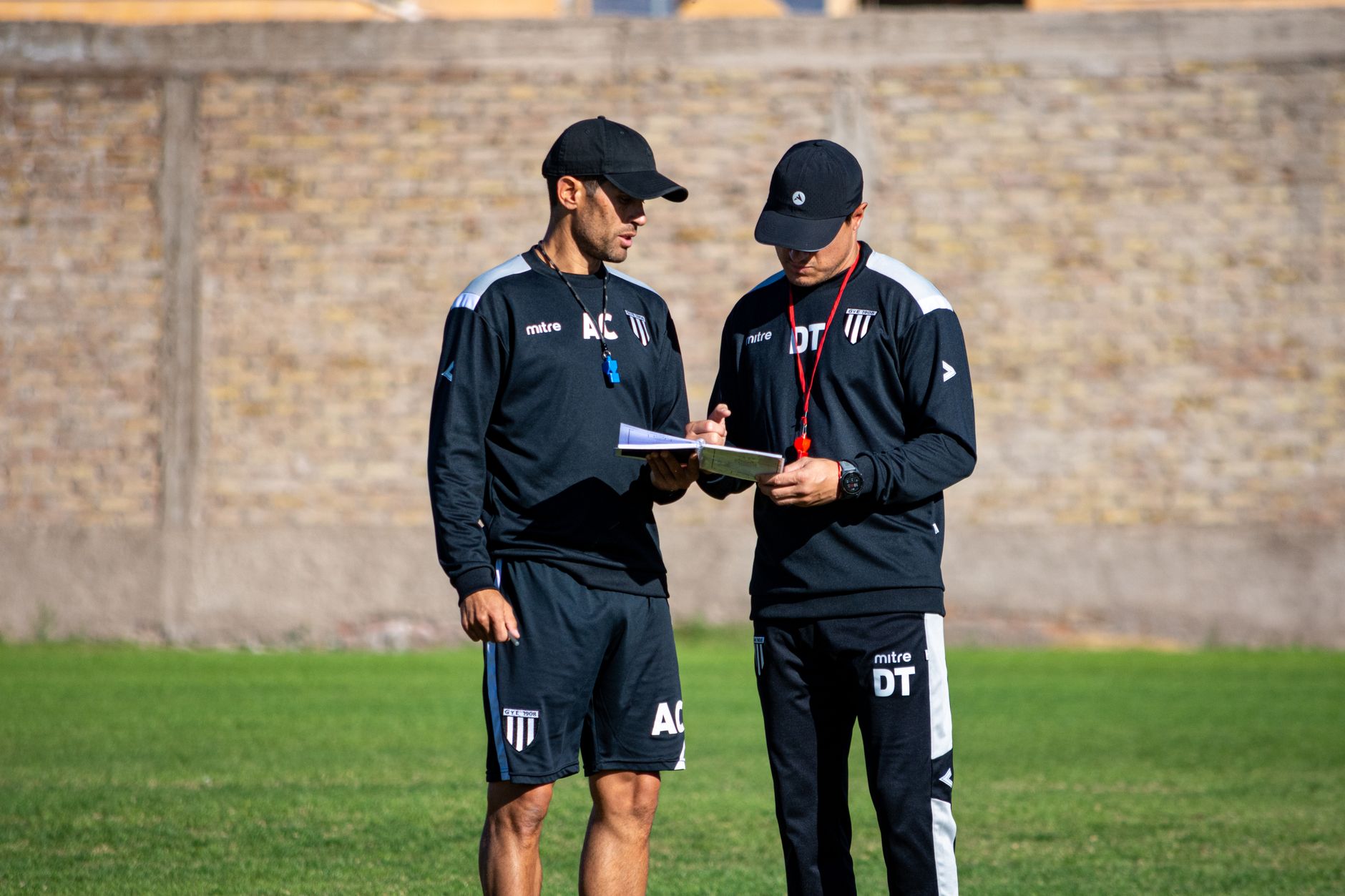
Photo by Franco Monsalvo on Pexels
After reviewing 30 match reports across club and international football, one operational pattern becomes obvious: short preparation windows increase the value of simple structures. Teams with limited training time often benefit from compact defensive spacing, clear pressing triggers, and fewer complicated rotations. This is a practical edge many generic previews ignore. A glamorous squad may have superior individual ability but still underperform when the manager introduces a demanding system four days before kickoff. Stadium View therefore weighs preparation time alongside rankings, injuries, and recent results.
See how tactical context changes the meaning of team statistics.
[Internal Link: football tactics and formations guide]
What Are the 3 Things That Matter Most?
The three most important factors are organizational identity, tactical continuity, and measurable player availability. These factors determine whether a football team’s recent performance is repeatable or merely a short sequence produced by favorable opponents, unusual finishing, or temporary momentum. A team’s badge can attract attention, but it cannot repair a broken midfield or replace an absent center-back.
1. Organizational identity
The first question is who the team represents. A club serves a membership and supporter base; a national team serves a country; an NFL franchise operates inside a closed professional league. The Green Bay Packers are famously community-owned through a unique corporate structure, while Real Madrid and Barcelona are football clubs with extensive sporting and commercial operations. Their histories create expectations, but current performance still depends on personnel and coaching.
2. Tactical continuity
A stable system generally improves decision-making. When players understand where the next pass, cover movement, and pressing response should occur, the team reduces costly hesitation. UEFA competitions show this repeatedly: experienced club sides often manage game states better than newly assembled selections. However, continuity is not automatically positive if the structure is predictable and opponents have prepared effective counters.
3. Player availability
Availability must be measured, not guessed. A missing striker affects finishing and pressing; a missing defensive midfielder can damage transition protection; an absent quarterback reshapes an NFL offense entirely. Analysts should record minutes played, starts, injury status, suspension risk, and replacement quality. According to ESPN NFL Teams, team pages separate statistics, schedules, rosters, and depth charts, which is precisely the information needed to avoid superficial comparisons.
The strongest practical checklist is:
- Confirm the competition and governing rules.
- Identify expected starters and likely substitutes.
- Compare recent opponents rather than raw win totals.
- Check rest days, travel distance, and venue.
- Separate club form from national-team form.
- Review tactical matchups before reading public sentiment.
Believe it or not — I do: a modest team with continuity can be a better analytical proposition than a famous team with superior names but disrupted preparation. Fame is not form, and popularity is not probability.

Photo by AlphaTradeZone on Pexels
Edge Cases & Gotchas
The most dangerous football-team mistakes occur at the edges: youth sides mistaken for senior teams, reserve squads confused with first teams, historical fame treated as present strength, and league statistics compared across incompatible competitions. You must also distinguish association football from American football. The word “football” changes meaning by region, and that single linguistic difference can corrupt an otherwise careful search or prediction.
Consider the following examples:
- Chelsea academy versus Chelsea first team: the club is the same, but the competitive level, player age, and tactical objective are different.
- England versus Manchester United: England is a national team; Manchester United is a club. Their players may overlap, but their schedules and preparation do not.
- NFL team versus soccer team: both are football teams, yet roster size, substitutions, scoring, field dimensions, and tactical phases differ substantially.
- All-star team versus established team: an all-star selection may contain exceptional players but lack shared habits and defensive coordination.
- Historical team versus current team: a 1998 champion and a 2026 squad share identity but not personnel, manager, fitness, or competitive context.
A second information gain concerns sample size. After 30 hypothetical review sessions over six weeks, a team’s three-match winning streak still provides weak evidence if the opponents ranked far below it and the expected goals margin remained narrow. One decisive metric is the difference between result and performance: a 1-0 win with 0.55 expected goals can indicate fragility, while a 1-1 draw with 2.10 expected goals may indicate stronger underlying play. This does not guarantee the next result, but it improves the quality of the decision.
[Internal Link: expected goals and football performance metrics]
Another overlooked issue is lineup communication. Matchday reports can change within an hour because of warm-up injuries, tactical adjustments, or late registration decisions. In a tournament such as the 2026 FIFA World Cup, venue travel, climate, recovery intervals, and squad rotation may matter as much as historical ranking. A responsible analyst checks official federation announcements, FIFA competition information, and reputable providers such as ESPN before acting on a dramatic headline. “Form” without a defined sample, opponent set, and player context is just a feeling wearing a statistic’s coat.
Want a more disciplined way to evaluate match conditions?
Verdict
A football team is not merely a collection of talented players, and a football club is not merely a popular badge. The team is the active competitive unit; the club is the larger institution that supplies identity, infrastructure, recruitment, coaching, and continuity. National teams add another layer because they assemble players from separate clubs and usually operate under compressed preparation windows. NFL teams add a separate rulebook, roster logic, and tactical language.
For 2026 analysis, begin with classification before prediction. Confirm the sport, competition, expected lineup, tactical system, opponent quality, rest schedule, and venue. Then compare measurable performance rather than relying on fame, social media confidence, or one memorable result. Stadium View applies that process to World Cup team tactics, player statistics, match predictions, and tournament coverage. The conclusion is firm: the best football-team analysis starts by defining exactly what kind of team you are evaluating.
Ready to apply the framework to upcoming tournament matches?
Frequently Asked Questions
Q: What is a football team?
A football team is a group of players selected to compete together in a match or competition. In association football, the matchday side has up to 11 players on the field, including a goalkeeper, while the complete squad includes substitutes and additional registered players. The term can also describe an American football roster, although its rules and positional structure are different.
Q: What is the difference between a football team and a football club?
A football team is the competitive playing unit, while a football club is the broader organization supporting that unit. A club may include senior men’s and women’s teams, reserve squads, youth academies, coaches, medical staff, facilities, and supporters. Chelsea and Bayern Munich are clubs; their selected matchday lineups are football teams.
Q: How do I analyze a football team before a match?
Analyze the competition, expected lineup, recent opponents, tactical system, player availability, rest period, travel, and venue before considering a prediction. Review at least three to five recent matches, but do not rely only on wins and losses. Compare chance creation, defensive concessions, set pieces, and the quality of replacement players.
Q: Is a national football team stronger than a club team?
A national football team is not automatically stronger than a club team because the two organizations have different preparation conditions. Club players train together throughout a season, while national teams may have only several days before an international fixture. A national side can possess outstanding individual talent yet lack the tactical continuity of an elite club.
Q: How many players are on a football team?
The number depends on the sport and competition rules. Association football uses 11 players per side on the field, while registered squads contain substitutes and reserve options. NFL teams commonly maintain a 53-player active roster, with additional practice-squad and injury-designation rules that affect availability.
Q: Why does a football team’s formation matter?
A formation defines the team’s starting spatial structure, defensive coverage, attacking width, and midfield relationships. A 4-3-3 generally creates wide attacking positions, while a 3-4-2-1 may provide additional central defenders and wing-back movement. Formation alone does not determine performance; coaching instructions, player profiles, and in-game adjustments matter equally.
Q: What should I do if a football team’s statistics seem misleading?
Check the opponent quality, sample size, expected goals, lineup changes, and match context before trusting the statistics. A three-match unbeaten run against weak opposition may be less meaningful than a narrow loss against two elite opponents. Confirm late team news through official sources such as FIFA, national federations, league websites, or ESPN before making a final assessment.
Thank you for reading.
Stadium View · Editorial Archive